Mechanical or pneumatic conveying – which solution fits your process?
The transport of bulk materials presents different challenges in many industrial plants. Mechanical and pneumatic conveying systems each offer specific advantages. The appropriate technology for a given application depends on bulk material properties, conveying distances and process requirements.
Differences between mechanical and pneumatic conveying of bulk materials
Reliable bulk material transport is a key function in many industrial processes. Whether raw materials, alternative fuels, powders or granulates, the material must be conveyed continuously, safely and economically.
In principle, two technologies are available for this purpose: mechanical conveying and pneumatic conveying. Both systems offer specific advantages and are suitable for different tasks in bulk material handling depending on the application.
Mechanical conveying – robust and energy-efficient
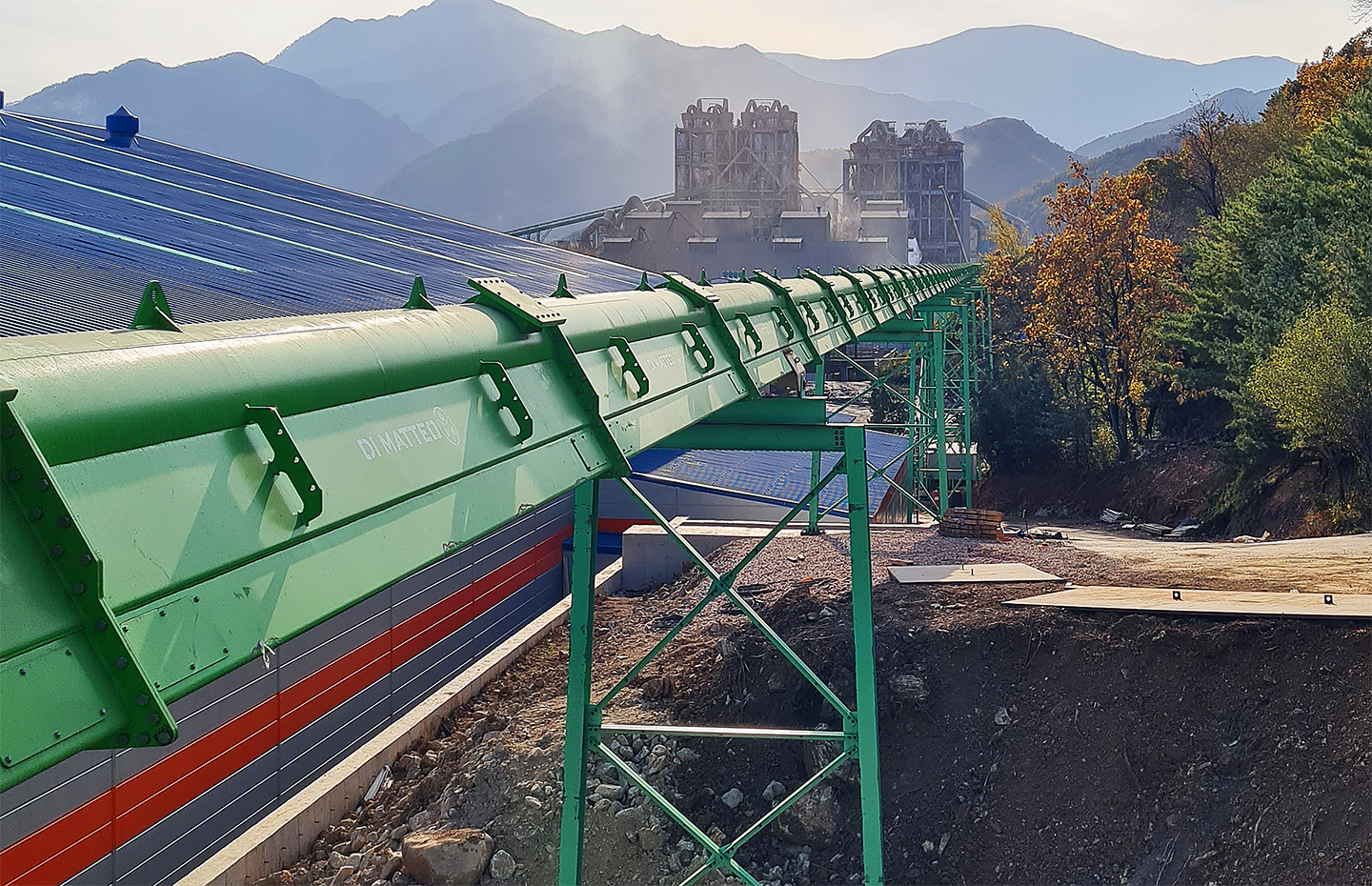
Mechanical conveying systems transport bulk materials using mechanical components such as belts, chains or screws. Typical examples include belt conveyors, drag chain conveyors, bucket elevators and screw conveyors.
This technology is commonly applied where large material quantities must be conveyed over defined distances. Mechanical systems are characterised in particular by robust construction and energy-efficient operation.
Typical advantages of mechanical conveying technology:
- High conveying capacities possible
- Energy-efficient operation
- Robust design suitable for abrasive or coarse bulk materials
- Simple maintenance and good accessibility
Mechanical conveying systems are frequently used where conveying routes are clearly defined and sufficient installation space is available.
Pneumatic conveying – flexible and enclosed
In pneumatic conveying, bulk materials are transported through pipelines by means of air flow. The material is conveyed within a closed system.
This technology is particularly suitable for applications with complex routing or limited installation space. Pipelines can be routed flexibly and allow conveying over longer distances or larger height differences.
Typical advantages of pneumatic conveying technology:
Conveying in fully enclosed pipelines
- Flexible pipeline routing in complex plant layouts
- Transport over long conveying distances possible
- Good integration into existing plants
This technology is frequently used particularly for fine or dusty materials, as it enables clean and controlled conveying.
Which solution is suitable?
The choice between mechanical and pneumatic conveying always depends on several factors. These include in particular:
Bulk material properties
- Required conveying capacity
- Conveying distance and elevation differences
- Available space in the plant
- Requirements regarding dust control or emissions
In many plants, both technologies are combined in order to utilise the respective advantages.
Application-specific design for stable processes
As each bulk material places different requirements on the conveying system, careful system design is essential. Properties such as particle size, moisture content, abrasiveness or flow behaviour significantly influence which technology will operate reliably in the long term.
By combining different conveying systems, solutions can be implemented that are aligned with the material, process and plant layout – supporting stable operation, high plant availability and economical performance.